Roof Leak at a Rooftop Unit Curb
- You See
- Stains under the HVAC unit and old caulk cracked at the curb corners.
- What It Means
- Curb flashing has pulled loose or was never run up the face. New flashing with formed corners replaces the caulk.

Leaks and Local Damage
As a Radcliff commercial roof repair contractor, we trace leaks to the seam, drain, curb, or panel lap letting water in, then repair it with materials matched to your roof.
A Radcliff commercial roof repair contractor answers this before any patch goes on. Repair or replace a leaking flat roof comes down to how much insulation is wet.
Water shows inside far from where it gets in. These six spots account for most of the leaks found on the roof above a ceiling stain.
Each repair matches the material already on the roof, so the patch moves and ages the way the field does.
Welded TPO and PVC patches, taped EPDM laps, and new T-joint covers on seams that have lifted or split.
Rooftop unit curbs, pipe boots, and skylight frames flashed with pre-formed pieces and stainless clamps.
Backed-out screws replaced, end laps reset with butyl tape, closures renewed, and holed panels swapped for matching profiles.
Drain rings reset, scuppers relined, and loose edge metal or coping refastened so wind cannot peel the roof back.
Water that gets past a seam soaks the insulation under it. The left column is a roof left alone; the right is the same roof after the repair.
Call with the room and the spot where water shows. We will find the drain, curb, or seam above it and tell you what the repair takes.
Repairs start inside, where the water shows, and finish on the roof with a check of the repaired detail.
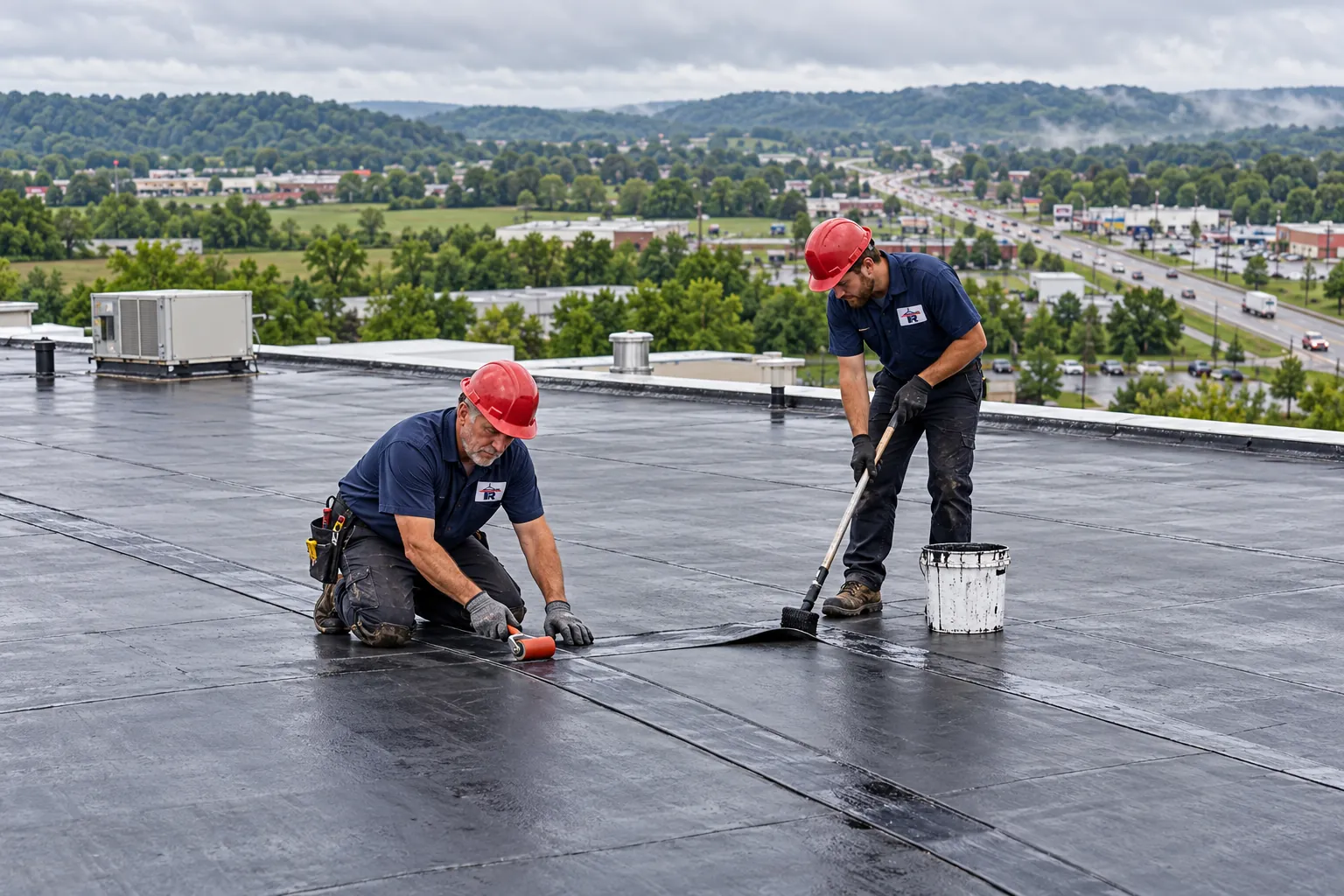
We mark the stain inside, then walk the roof above it, checking drains, curbs, laps, and flashing until the entry point turns up.
Core cuts around the leak show whether the boards are wet. Wet boards come out and get replaced before the membrane closes over them.
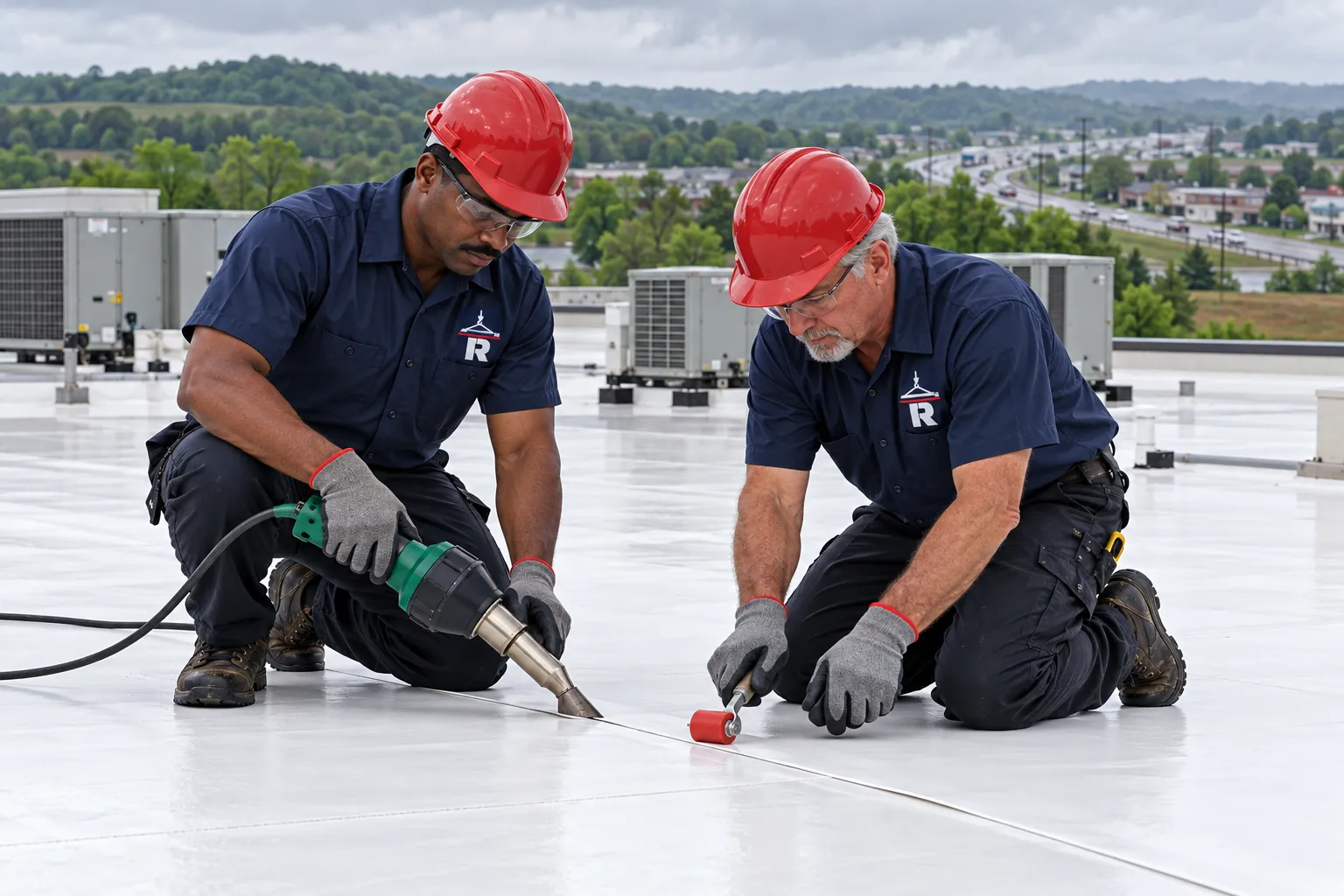
Welded patches on TPO, taped laps on EPDM, butyl and new screws on metal: the repair matches the roof that is already there.
Seams are probed, flashing is checked, and you get a short list of other spots worth watching on that roof.
Core cuts sometimes show wet insulation across too much of the roof for patches to hold. These are the systems that replace it.
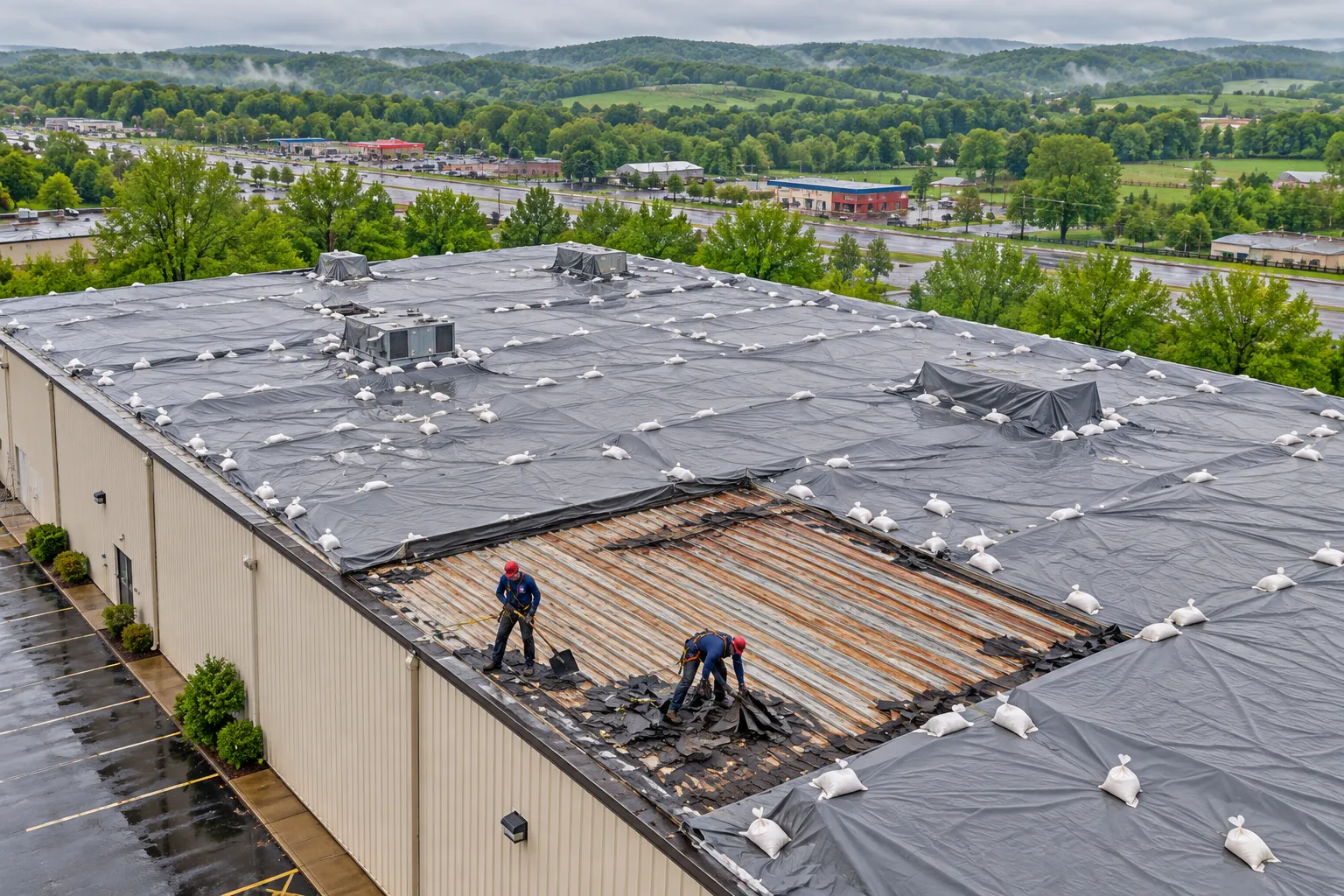
Parapet roofs with ponding history get new tapered insulation, a cover board, and a single-ply membrane.
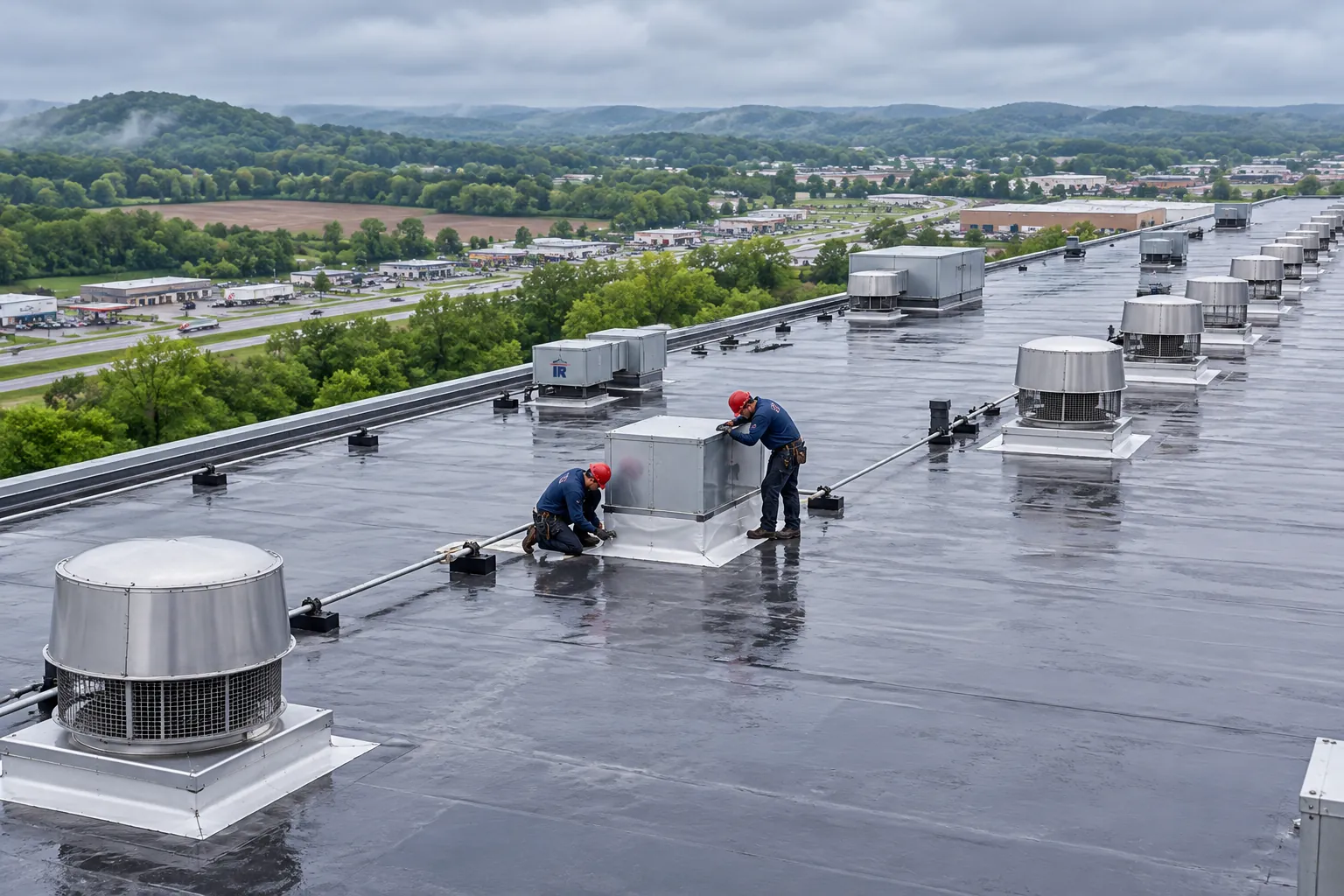
Welded white sheets replace failing laps on warehouses, offices, and retail strips.
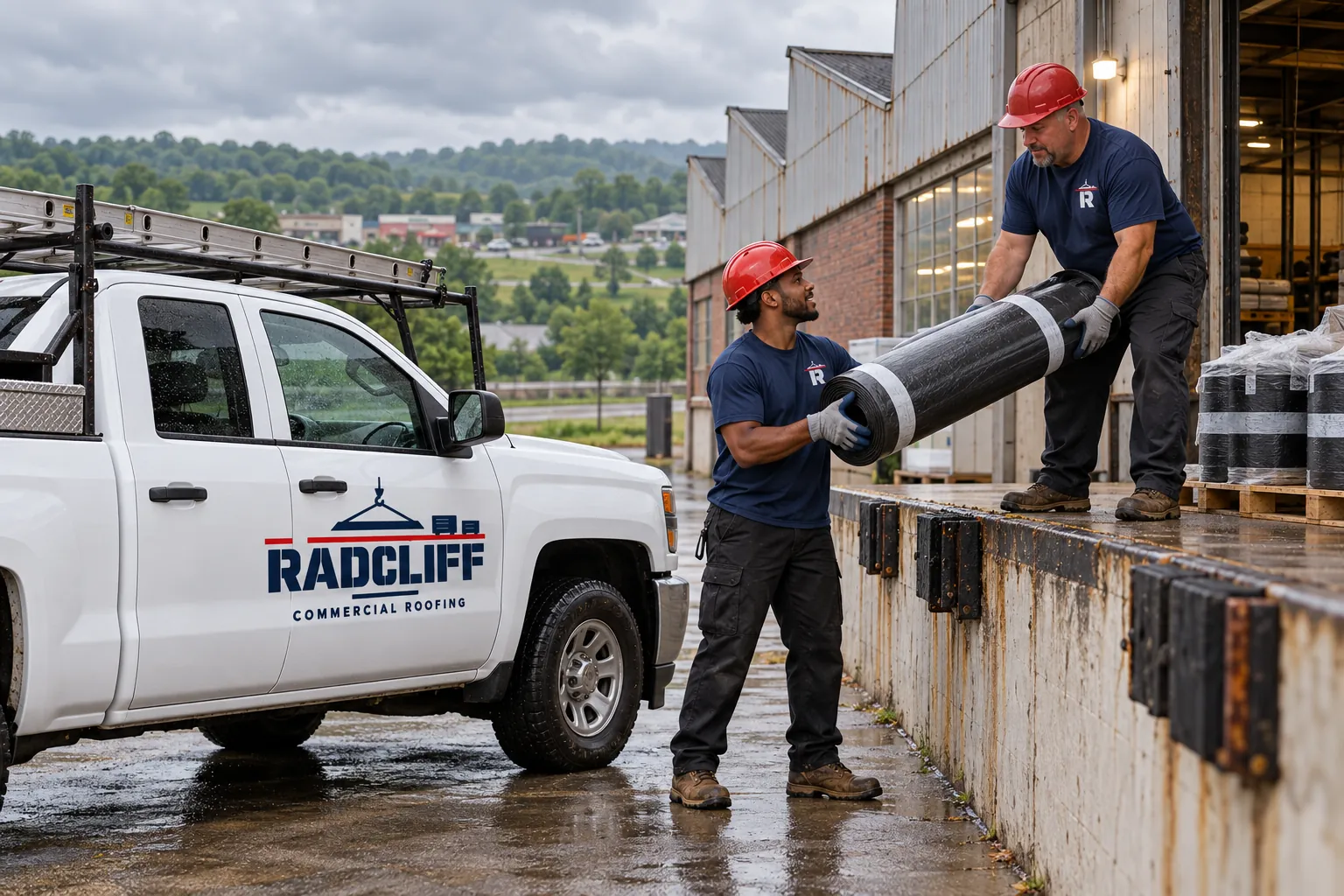
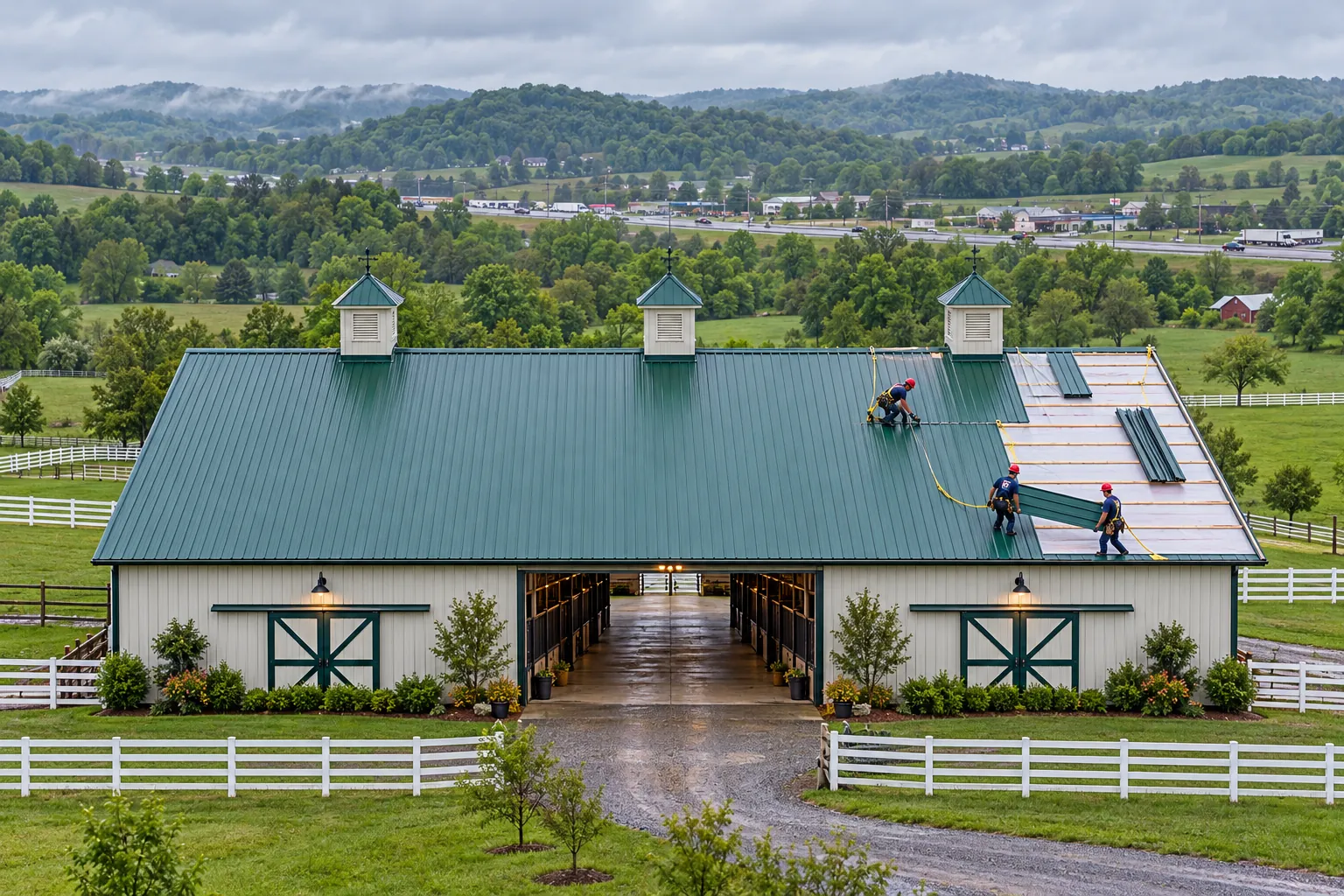
Rusted-through runs on shops and barns get new standing seam or R-panel.
Straight answers on leaks, insulation, and when a repair is the right call.
Water that gets past a seam or curb runs along the deck, the insulation joints, or a purlin before it finds a way down.
A stain under the office can start at a rooftop unit several bays over. That is why tracing starts inside and then follows the roof above it, rather than patching straight over the stain.
Most curb leaks can. Old caulk comes off, the curb flashing is rebuilt with pre-formed corners and run up the face, and the counterflashing gets sealed. If core cuts show wet insulation spreading far from the curb, the repair still closes the leak, but the wet boards around it get replaced too.
By how much insulation is wet and how many spots leak. One or two leaks at drains, curbs, or seams over dry insulation are repairs.
Soft areas across large sections, membrane shrinking off the parapets, rust holes in the deck, or patches stacked on patches point to recover or tear-off. Core cuts and a moisture scan settle it.
Elongated holes get oversized screws with new washers, or stitch screws into firm steel. Cracked end laps are opened, cleaned, and reset with fresh butyl tape. Crumbled ridge closures get replaced, and flashing pulled loose at walls and curbs is reformed. Long warehouse runs get checked first at the eave and ridge ends.
How far the water has traveled, how much wet insulation has to come out, the roof system, and access. A single drain ring reset costs far less than a curb rebuild with wet boards replaced around it.
A free estimate starts with the roof walk, so the price reflects the actual repair rather than a guess from the ground.
Tell us where water shows inside and what roof system sits above it. We will trace the leak and repair it to match.
Leave a name and number and we will call you back, or call us now at (364) 205-6782.