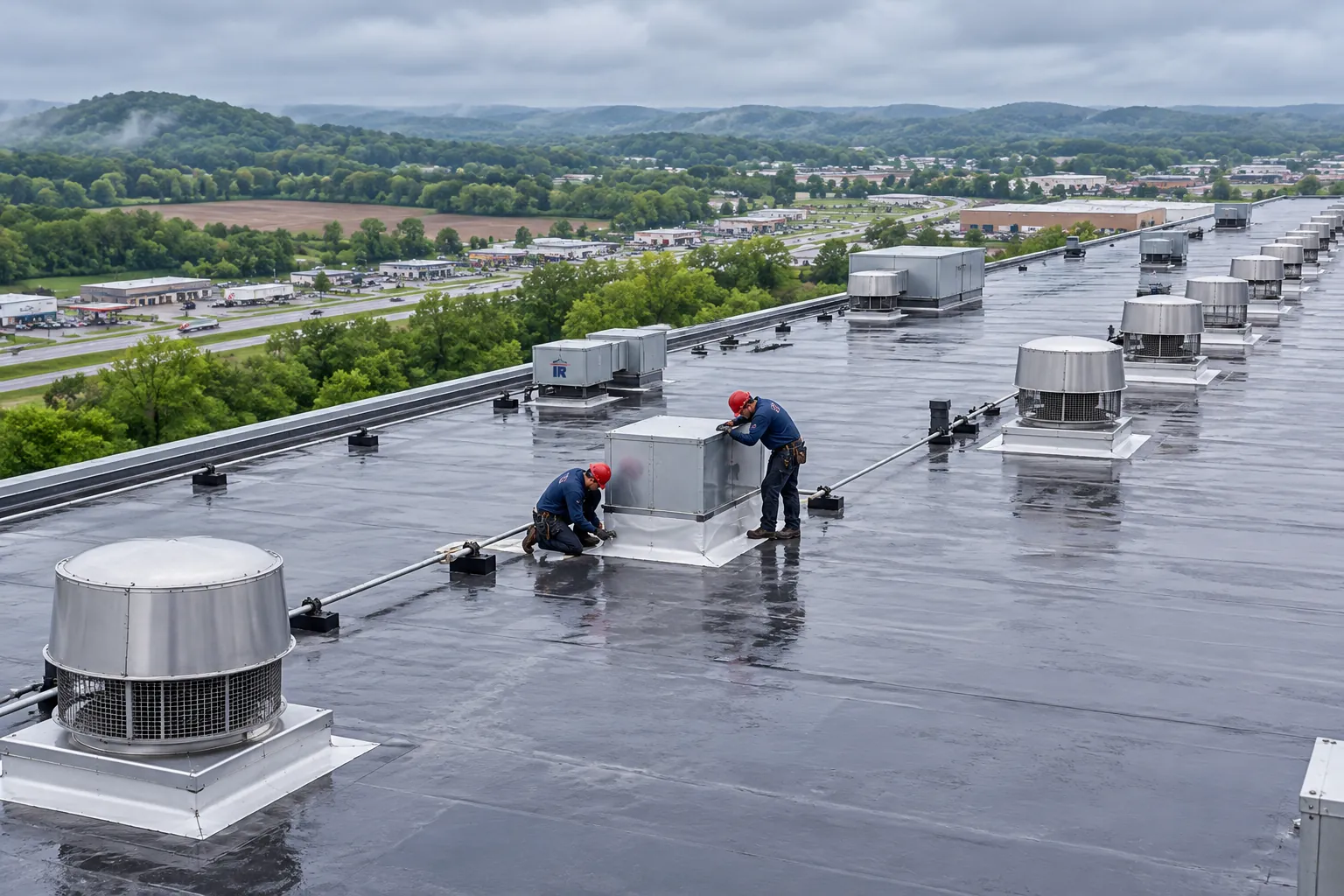
Stained Ring Around a Fan Curb
- You See
- A swollen, soft, or discolored ring of membrane around an exhaust fan.
- What It Means
- The sheet reacts with what the fan blows out. A resistant sheet and a grease box at that curb stop the spread.
Plants and Warehouses
As a Radcliff industrial roofing contractor, we replace and repair roofs on factories, plants, and distribution centers, sizing each section around shifts, stored product, and equipment.
A Radcliff industrial roofing contractor matches the sheet to what each stack and fan puts on the roof. The roof membrane for grease exhaust fans can differ from the field.
Plant roofs carry far more equipment than an office roof, and each penetration is a flashing detail that can leak.
Industrial roofing for plants in Radcliff, KY combines a field membrane with heavier detail work around everything the plant puts on the roof.
Tear-off sections are sized so each area is watertight by day's end, with crane picks in off-shift hours or blocked zones.
Each stack and fan gets listed by what it discharges, then a resistant sheet and grease containment box go around those curbs.
Pads welded or adhered from hatches to units, plus pipe supports that keep gas and condensate lines off the insulation.
Sumps at each drain bowl, overflow scuppers through parapets, and larger conductor heads where water leaves the roof.
Plant managers describe the left column. The right column is the same roof after a staged replacement.
That ring means the sheet and the exhaust do not mix, and it spreads. A walk of every stack and fan shows where a resistant sheet belongs.
Reroofing a plant during production follows this sequence, with plant managers marking clean rooms, electrical rooms, and server spaces before any deck opens.

Crews walk every curb, stack, drain, and walkway route, listing what each fan discharges and cutting cores where readings show wet insulation.
Air intakes near tear-off areas get covered or shut down, hot work permits cover torches near combustibles, and racked product gets tarped.
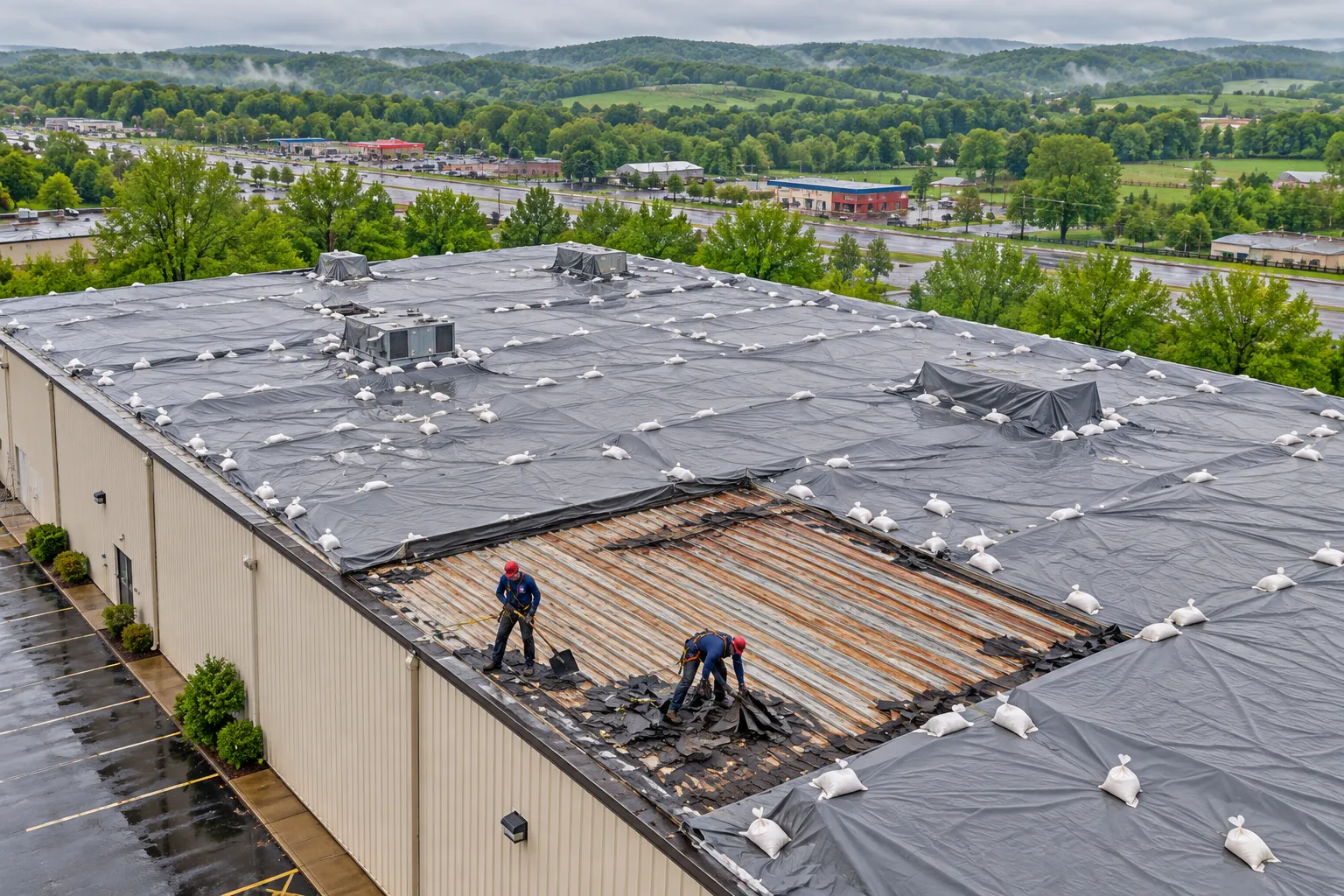
Each day's section comes down to the deck and gets insulation and membrane, with a daily tie-in sealing new roof to old.
Raised curbs, resistant sheets at exhaust, grease boxes, sumps, and walkway pads finish the roof around the equipment.
The same systems that cover warehouses and shops cover plant roofs, with heavier detail at each penetration.
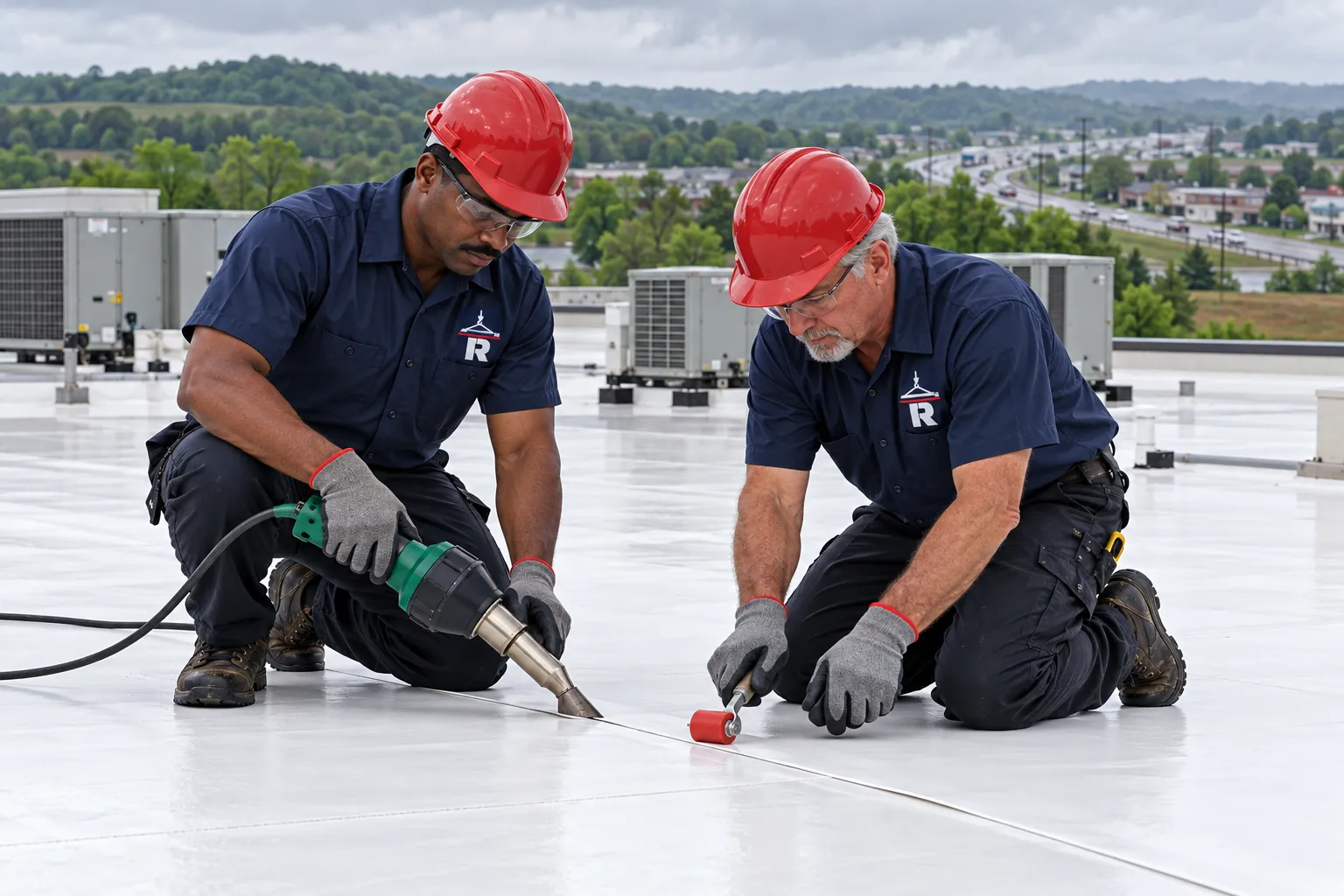
Welded white sheets are the common field membrane on steel decks over wide plant bays.
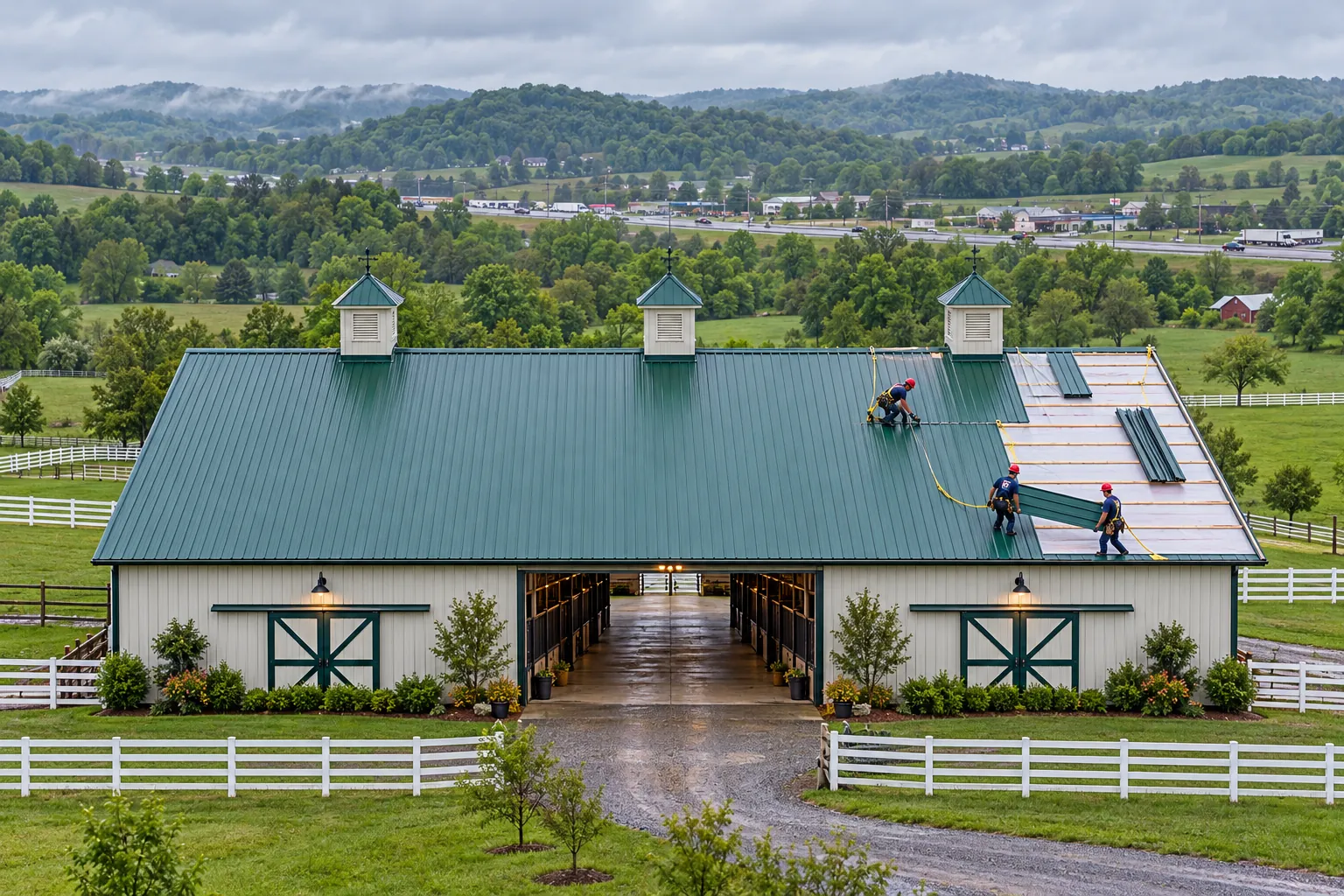
Pitched production buildings and storage sheds take standing seam or R-panel with insulation over conditioned space.
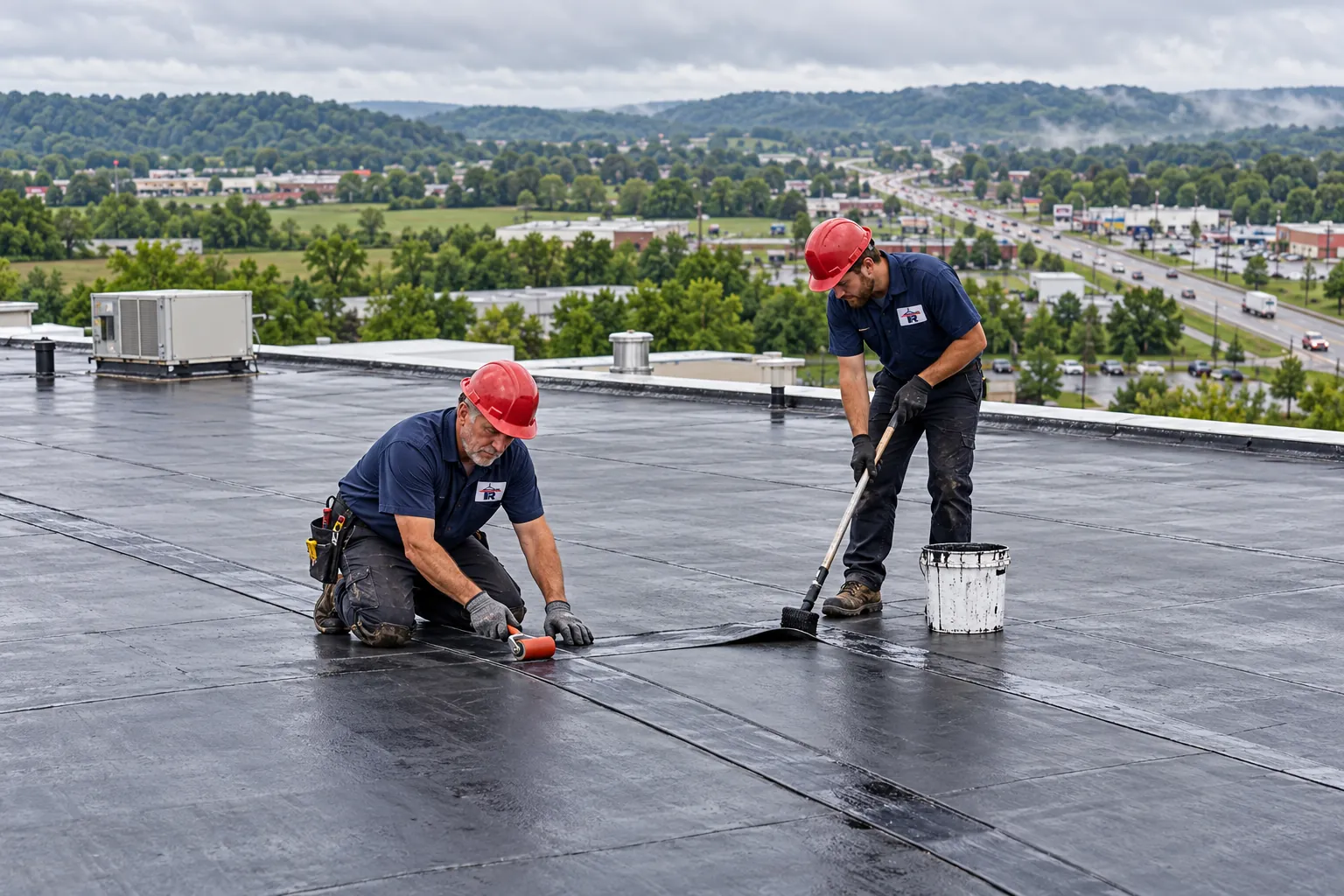
Cold-storage additions and plants with little exhaust often stay with rubber sheets and taped seams.
Answers on plant roofs, exhaust, working around operations, traffic, and drainage.
Roofing on factories, plants, warehouses, and distribution centers, where the roof carries large rooftop units, make-up air units, exhaust fans, process stacks, and long steel decks with many interior drains. The membranes and panels match other commercial roofs, but every penetration is a flashing detail, and a plant roof can carry hundreds of them.
The material landing on the roof from each fan sets the choice around it. PVC holds up well to oils and animal fats, TPO handles moderate exposure, and EPDM swells when oil soaks in.
List what each stack discharges, then pick the sheet for the whole roof or a resistant sheet around those curbs, with grease boxes at the fans.
Tear-off sections are sized so each area is watertight by the end of the day. Air intakes near the work get covered, crane picks happen off-shift or in blocked zones, product under open deck gets tarped, and hot work permits cover torches near combustibles. A daily tie-in seals new roof to old against overnight rain.
Service crews bring tools, ladders, and heavy boots onto the roof every week, and dropped screws puncture single-ply. Pads go along routes from hatches to units, curbs rise high enough for full flashing, and pipe supports keep lines off the insulation. During replacement each curb height is checked against the thicker new roof.
Tapered insulation sets the slope to each interior drain, scupper, and gutter, since long bays and deflected deck leave ponding between drains. A new roof adds crickets between drains and behind curbs, sumps at drain bowls, overflow scuppers, and larger conductor heads. Drain piping inside the building falls under plumbing review.
List the stacks, fans, and shifts, and we will walk the roof and plan tear-off sections around your production schedule.
Leave a name and number and we will call you back, or call us now at (364) 205-6782.