Peeling Splice Seams
- You See
- Lap edges lifting open where the seam was glued with liquid splice adhesive years ago.
- What It Means
- Older EPDM used splice adhesive that lets go with age. New sheets use primer and seam tape rolled under firm pressure.
Rubber Membrane Roofs
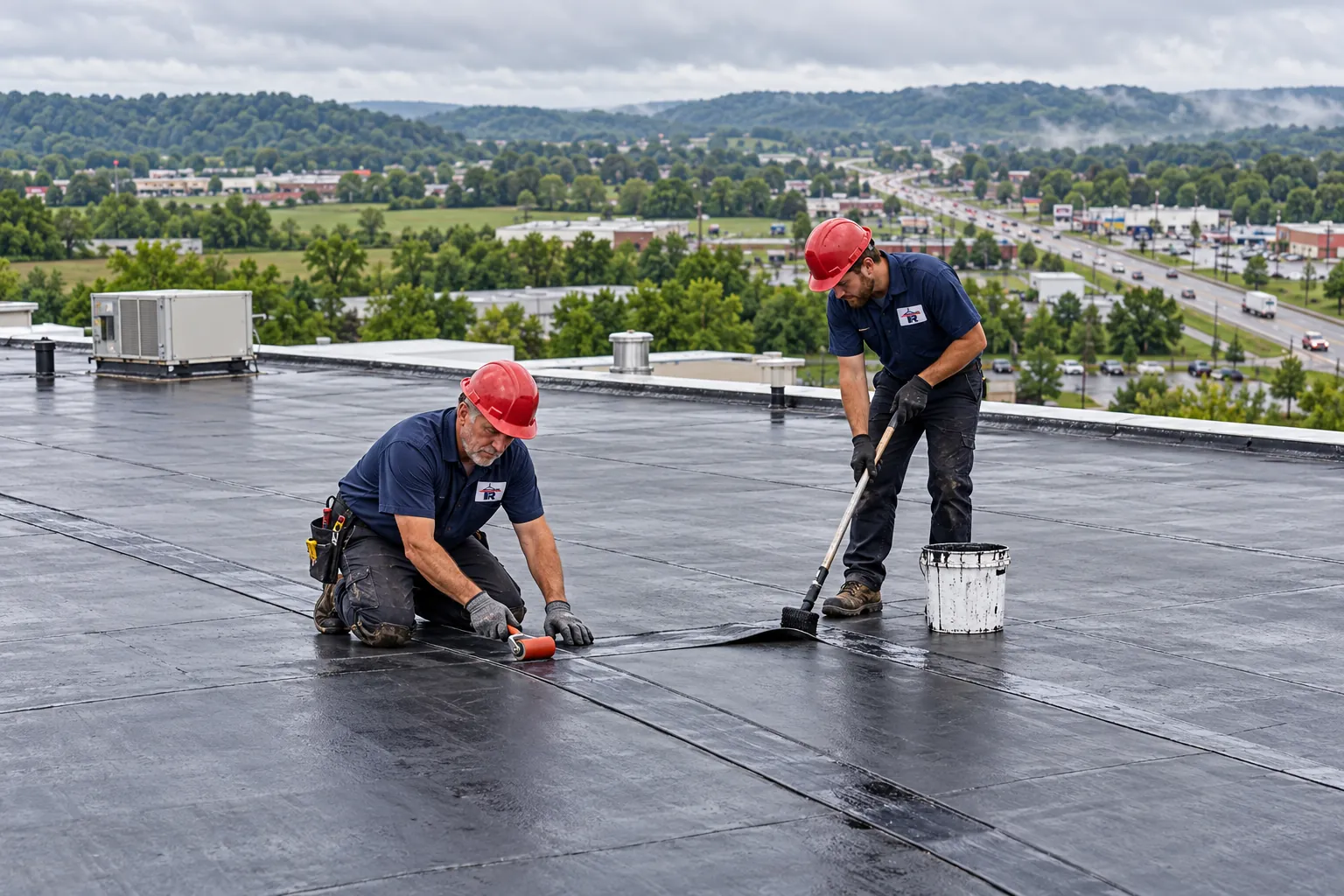
As a Radcliff EPDM roofing contractor, we lay synthetic rubber sheets on flat commercial roofs, join them with primer and seam tape, and flash every curb and wall.
Every Radcliff EPDM roofing contractor gets asked how rubber compares with the other single-ply sheets. Here are the three side by side.
Older EPDM roofs around Hardin County tend to fail in the same few places, and each points to a different fix.
EPDM can be adhered, fastened, or loose-laid, and the deck, structure, and parapet height choose among them.
Bonding adhesive glues the sheet to insulation or cover board. Roofs crowded with penetrations and wind-exposed edges suit it best.
Fastening strips or plates in the laps hold the rubber to steel decks on large buildings, with no adhesive across the field.
Loose-laid sheets sit under river rock or pavers. Only strong decks with parapets tall enough to hold stone qualify, after a structural check.
A white top surface over the same rubber keeps air-conditioned offices and retail cooler, using identical seam and flashing methods.
The left column is a tired rubber roof. The right column is the same building after new EPDM goes on.
A peeling lap lets water run under the sheet and into the insulation. A roof walk and core cuts show how far it has gone.
EPDM rubber roof installation in Radcliff, KY runs in this order, and seam work waits for dry membrane and steady temperatures.
We walk the old roof, pull at lap edges, and cut cores where moisture readings climb, so wet insulation is found before new rubber goes down.
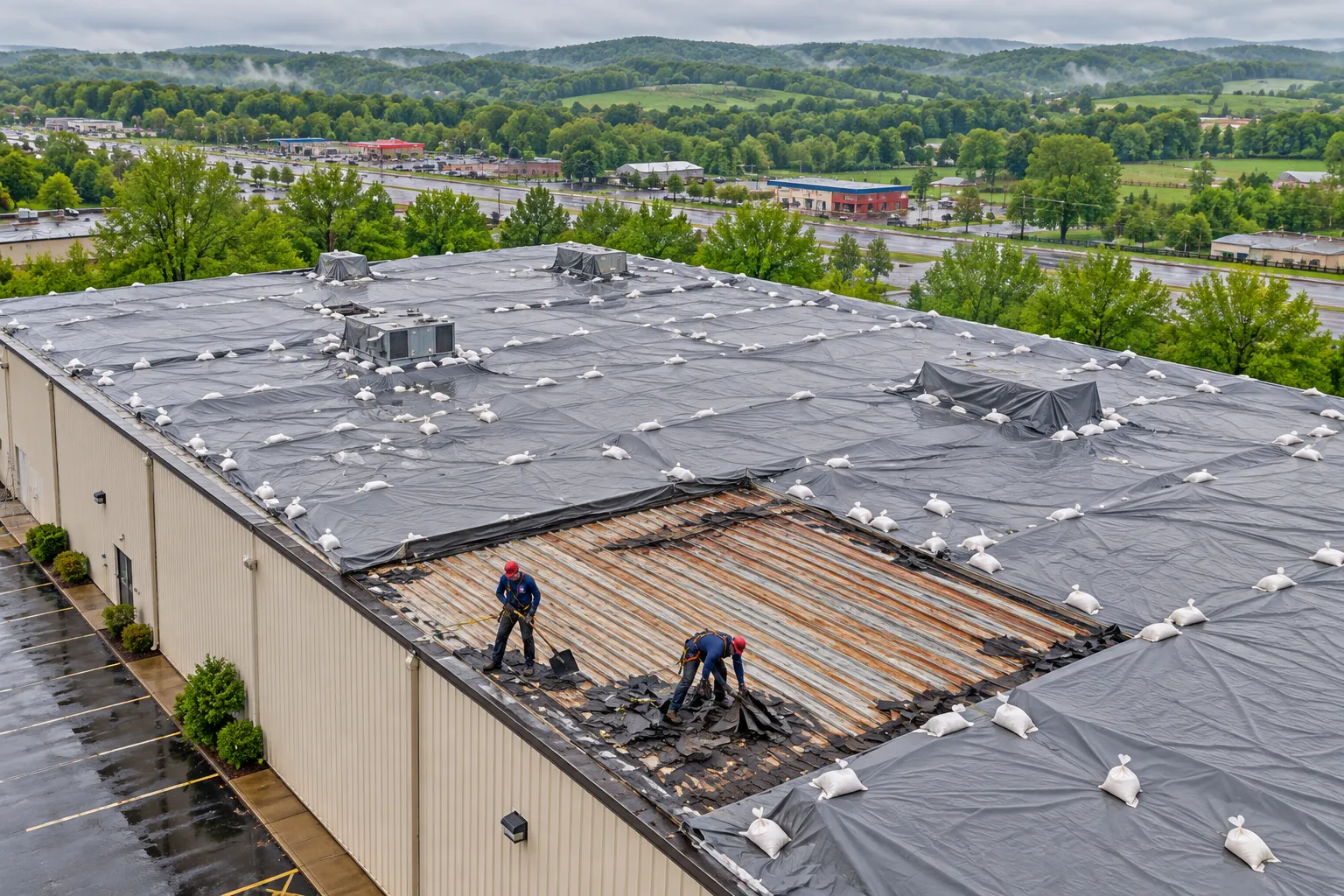
New insulation or cover board goes on, then large rubber sheets are unrolled and left to relax before adhering or fastening.
Both lap surfaces are marked, cleaned, and primed. Once the primer flashes off, seam tape is laid and rolled across its full width.
Cured flashing runs up walls and curbs, uncured rubber is molded at the corners, and termination bars lock the top edge.
Some roofs near Radcliff fit rubber, and others fit a welded sheet or metal panels better.
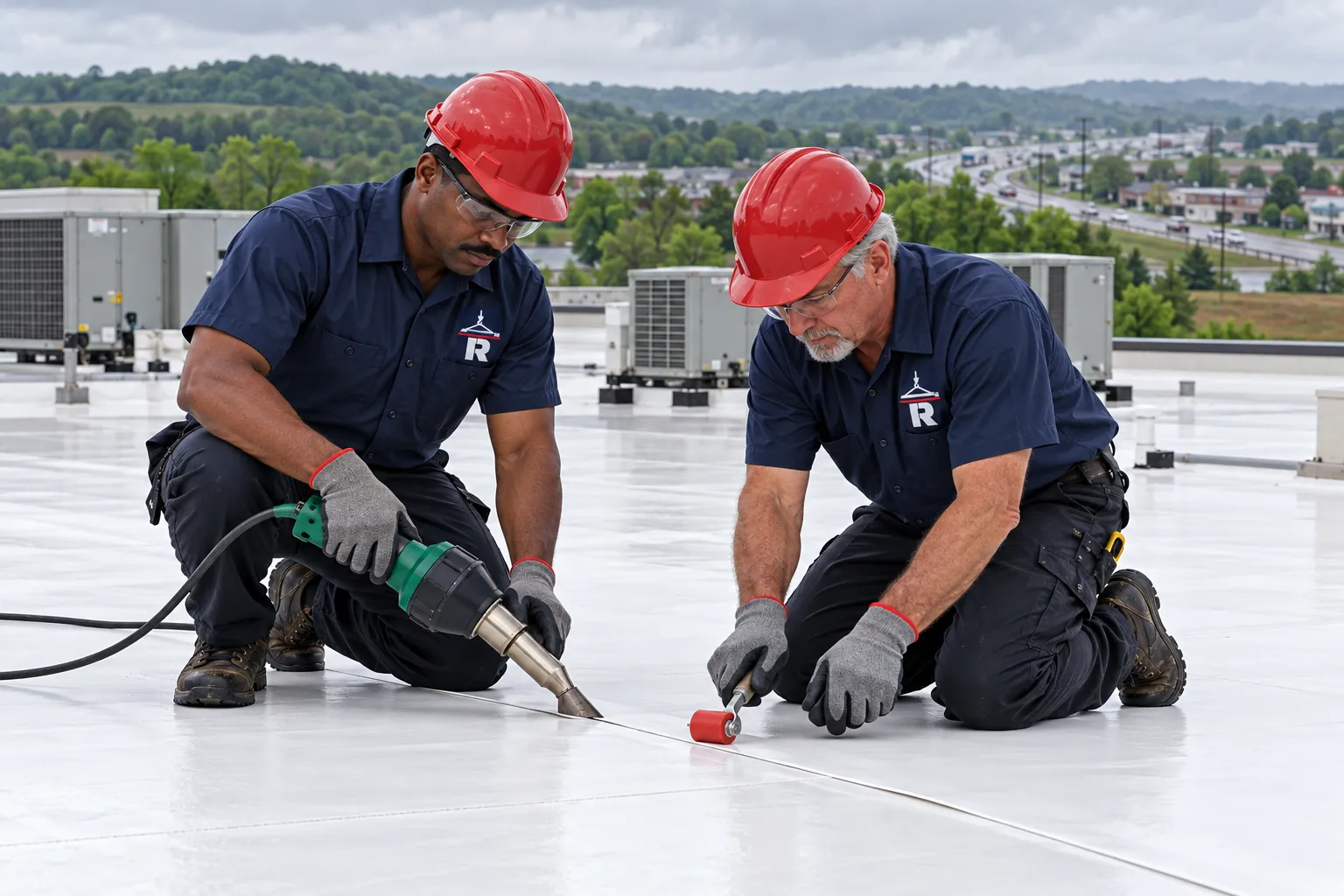
Welded white sheets suit warehouses and offices where reflecting summer sun matters more than cold-weather flexibility.
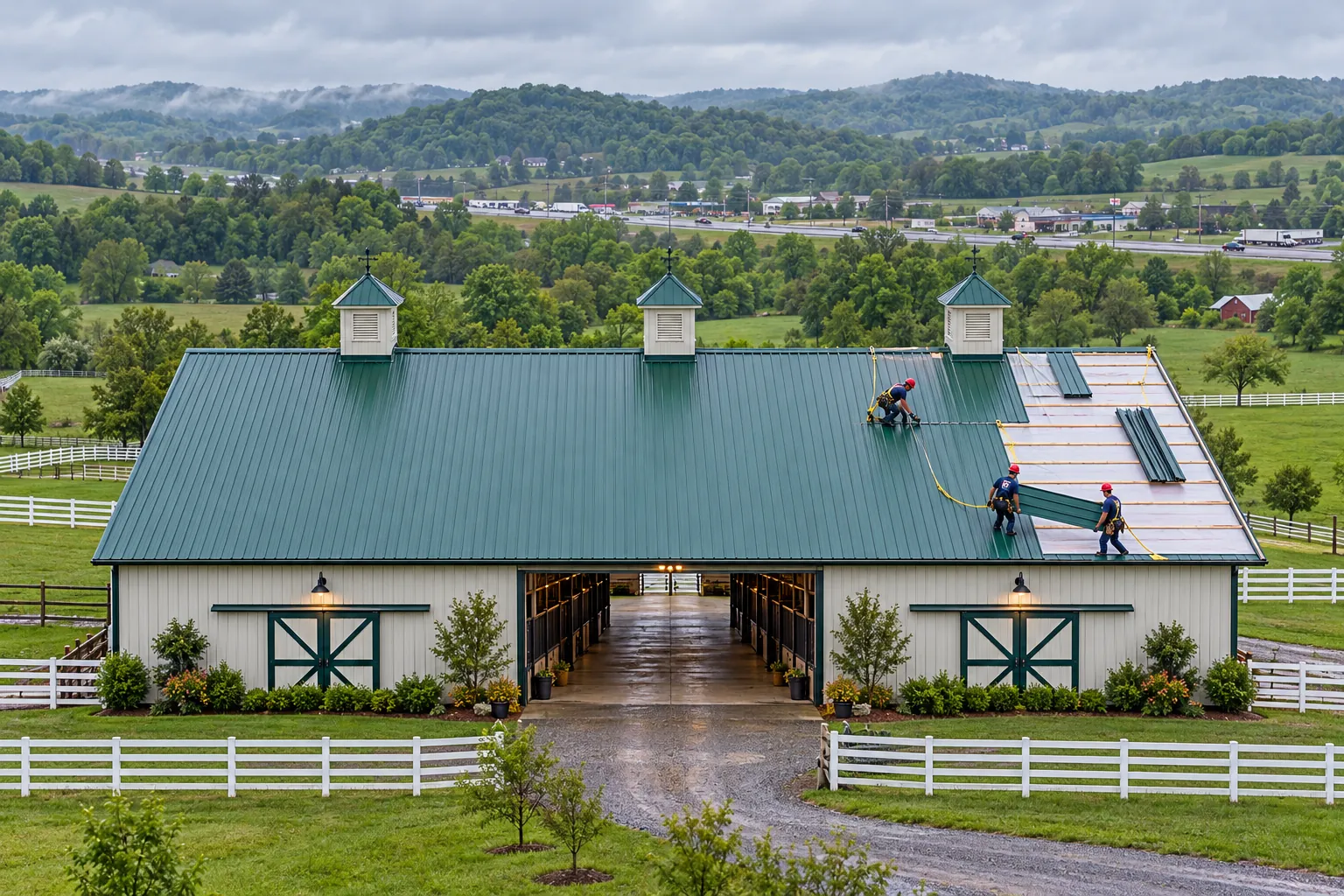
Pitched churches, shops, and barns shed water with standing seam or R-panel, where single-ply is the wrong tool.
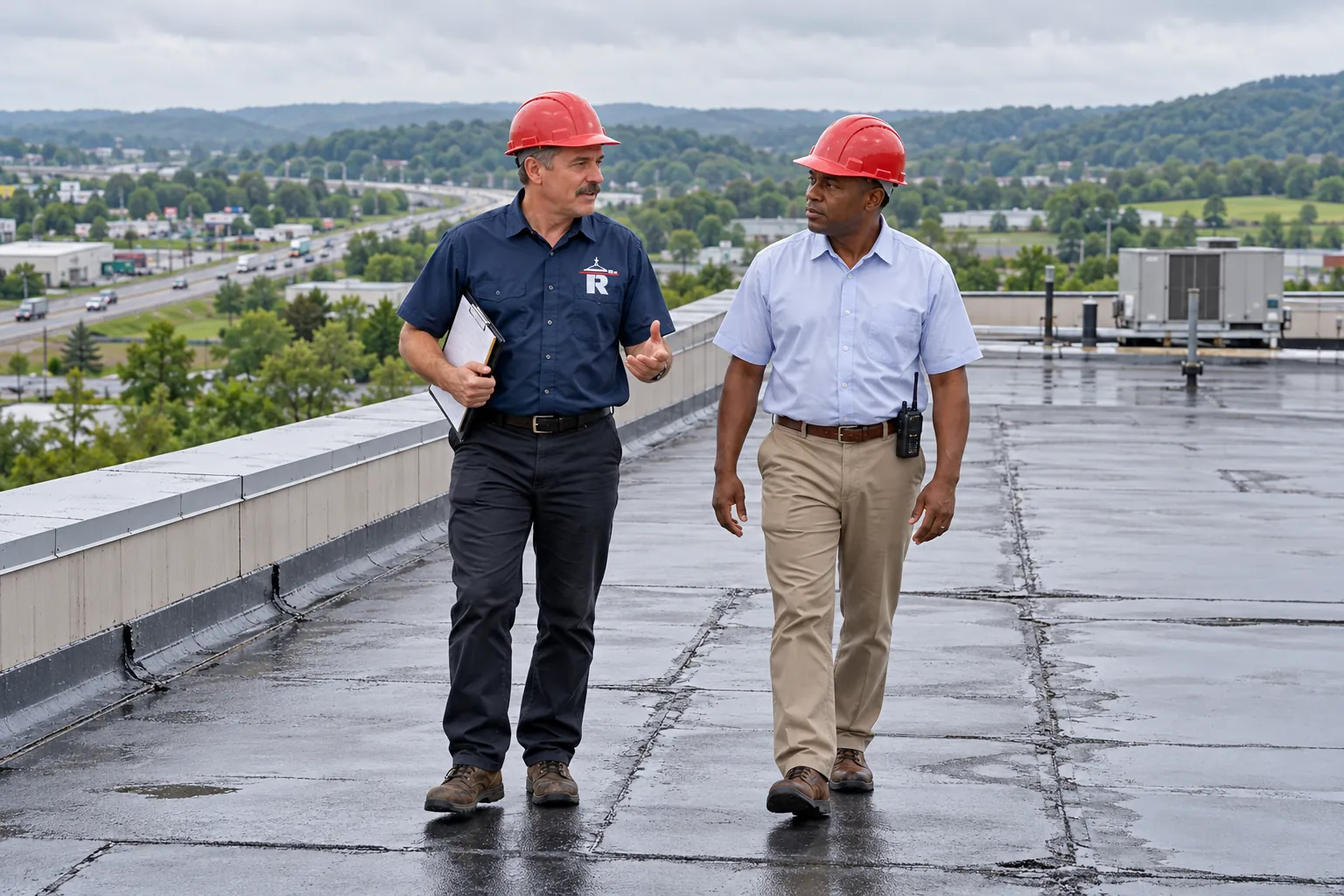
One peeling lap or a failed pipe boot on dry insulation is a repair job, matched with tape and cured flashing.
Short answers on rubber roofs, color, attachment, and flashing.
EPDM is a synthetic rubber membrane, usually black, laid in large sheets on flat and low-slope roofs. It stays flexible in cold weather and leaves fewer field seams than narrow rolls.
Older flat roofs, schools, churches, cold-storage buildings, and wide warehouse roofs use it most, and it handles ultraviolet light and freeze-thaw swings at the laps.
With primer and seam tape, pressed with a silicone roller and finished with lap sealant at the exposed edge and T-joints. Older roofs used liquid splice adhesive, which explains why so many aged seams peel at the lap edge. Cold, damp mornings slow primer drying, so seam work waits for dry rubber and steady temperatures.
Black absorbs sunlight and runs hot in summer, while white reflects much of it. The Department of Energy cool roof guide says the winter heating penalty of a reflective roof is usually smaller than the summer cooling savings in mixed climates like Kentucky.
Air-conditioned offices and retail gain most from white; unheated warehouses and cold rooms often keep black.
The deck, the structure, and the parapet height decide. Adhesive suits roofs with many penetrations and exposed edges, fastening strips suit steel decks on large buildings, and ballast suits strong decks with parapets tall enough to hold stone. Ballast adds heavy load, so a structural check of the deck and framing comes first.
Membrane runs up the parapet and across it under a metal coping cap.
Curbs around rooftop units get cured flashing with uncured pieces molded at each corner, drains clamp the sheet under the ring over water cutoff mastic, and pipes get pre-molded boots. Termination bars through the wall flashing stop it sliding as the rubber shrinks.
Tell us the roof size and whether the old sheet is glued, fastened, or under stone. We will check the laps and insulation first.
Leave a name and number and we will call you back, or call us now at (364) 205-6782.